Insurance Update
Who’s the Boss?
Introduction
In the current economic and industrial environment, people are present and working at workplaces through a variety of relationships ranging from actual employment to labour hire to contractor arrangements. As a result, when a worker is injured while working, it is sometimes not easy to decide who is liable. This can hinder an injured worker’s recovery and rehabilitation.
In recent times, the prevalence of labour hire arrangements has seen a potential shift of responsibility for the worker move from the employer to the occupier of the worksite. In these situations, the legal concept of pro hac vice may apply. The legal wording of this legal concept literally translates to, “for this occasion only”.
If the facts of a claim do cause the concept of pro hac vice to apply, then entities which are not the actual employer of the injured worker may face a greater liability exposure than anticipated. The recent Court of Appeal decision of Mt Owen Pty Ltd v Parkes [2023] NSWCA 77 is right on point.

Facts
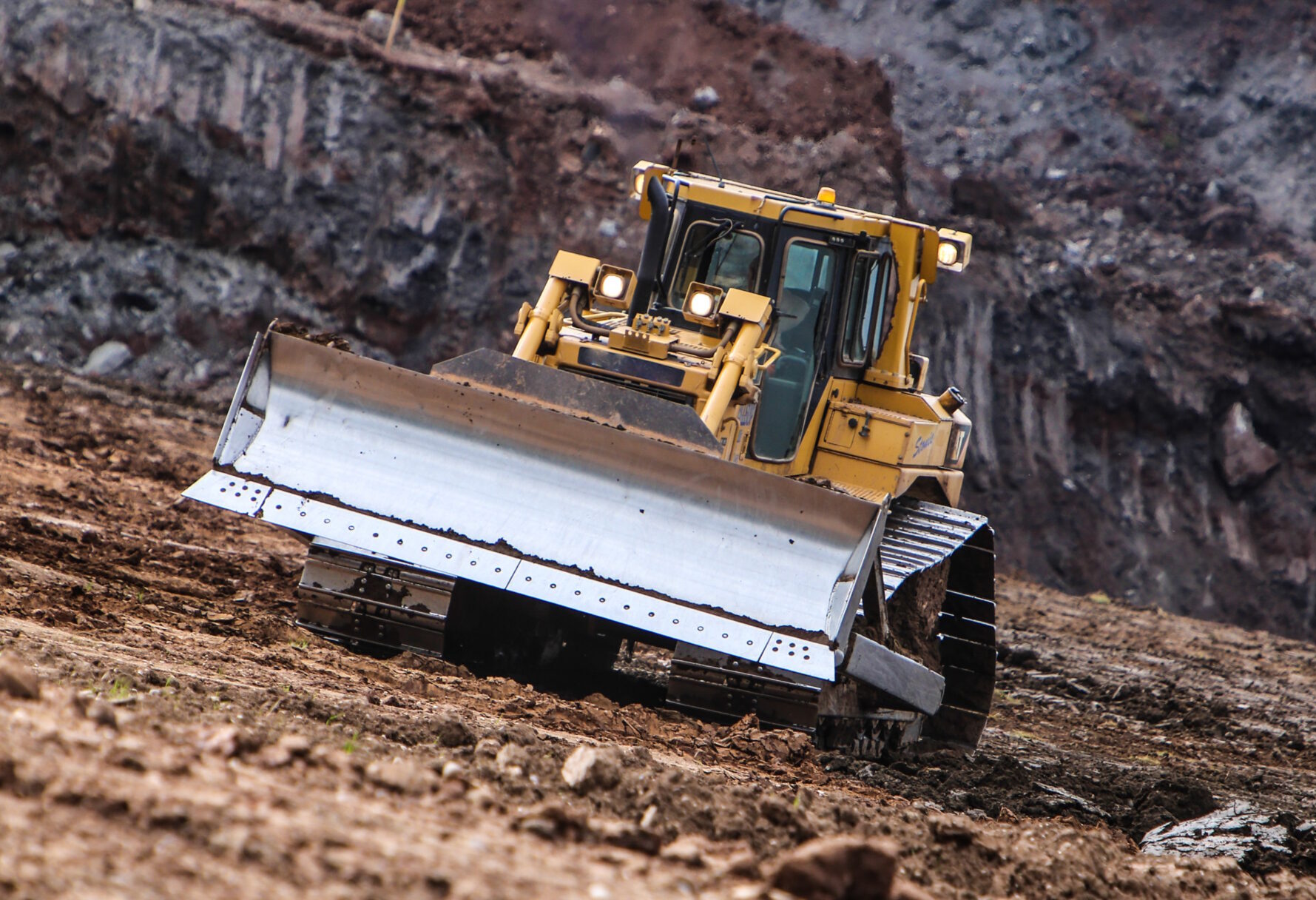
The Plaintiff and a co-worker, Mitchell Kemp (Kemp) were undertaking maintenance on a bulldozer at the Glendell coal mine (the mine).
Both men were employed by Titan Technicians Enterprise Pty Ltd (Titan). The mine was owned and operated by Mt Owen Pty Ltd (Mt Owen). Therefore, in order to understand the application of legal concept of pro hac vice, Titan was the employer and Mt Owen was the host employer.
During the maintenance work, the Plaintiff was injured when Kemp dropped the blade of the bulldozer suddenly, causing a crush injury to the Plaintiff’s right leg.
The evidence before the Courts focussed upon Mt Owen’s “job safety analysis” (JSA) and whether the JSA should have specifically stated no equipment could be moved while workers were within the footprint of the bulldozer.
Claims / Arguments
The Plaintiff claimed damages against Mt Owen and Titan.
Neither party disputed that Kemp had been negligent. However, the Plaintiff claimed that Mt Owen (and not Titan) was vicariously responsible for Kemp’s negligence and Mt Owen breached its own duty of care to the Plaintiff. Employers are vicariously responsible for their employees when their employees, while working for them, are found to be negligent. In other words, when an employer is responsible for their employee, then the employer will also be responsible for the employee’s carelessness.
Mt Owen asserted that Titan (as the employer) was vicariously responsible for Kemp’s negligent act, and that Titan (as the employer) breached its duty of care to the Plaintiff and was at least partly responsible for any damages payable to the Plaintiff.
The onus was upon Titan to prove that Kemp had in effect become the employee of Mt Owen pro hac vice. The outcome of this point would therefore determine whether Titan or Mt Owen was vicariously liable for Kemp’s actions.
Trial
Campbell J found the Plaintiff was the employee of Mt Owen pro hac vice and it was therefore vicariously liable for Kemp’s negligence.
Campbell J arrived at this decision for the following reasons:
- Kemp was deemed by Mt Owen to be a full-time employee because he had worked at Mt Owen for more than 3 years.
- Mt Owen exercised power and authority over the way Kemp performed his work at Mt Owen.
- Mt Owen required Kemp to perform the bulldozer maintenance in accordance with the JSA.
- Titan had no control as to how Kemp performed tasks allocated to him at Mt Owen.
Campbell J found that both Mt Owen and Titan breached their own duties of care to the Plaintiff, and apportioned liability as follows:
- 60% for Kemp’s negligence (for which Mt Owen was responsible); and
- 40% to be shared equally by Mt Owen and Titan.
A claim for contributory negligence against the Plaintiff was dismissed. This means the parties tried to argue that the Plaintiff somehow contributed to his injury and losses flowing from it, but the Court did not accept that argument.
Appeal
Mt Owen appealed the findings that it was liable.
Titan cross-appealed the attribution of liability ascribed to it (i.e. 20%).
Court of Appeal
Mt Owen’s appeal
The appeal was dismissed in an unanimous judgment.
Campbell J correctly accepted there cannot be dual vicarious liability in two principals for the acts of a negligent individual.
Campbell J also correctly held that while an employer is vicariously liable for the negligent act of an employee undertaken within the scope of his or her employment, the employer may not be the legal employer of the worker.
Where a worker is undertaking work on the premises of, and under direction from, another party, the transfer of control may lead to a shift of liability from the legal employer to the host employer. While such a transfer has been said to arise only under “exceptional circumstances”, modern labour hire arrangements and the statutory regulation of workplace safety may more readily lead to such a finding, depending on the nature and extent of control over a worker.
Mt Owen’s authority to give directions and orders to workers provided by Titan conferred by the labour hire contract, the detailed safety requirements set out in the JSA, and evidence that Kemp was subject to direction by Mt Owen’s supervisors, demonstrated a transfer of control to Mt Owen.
Further, Titan required its employees to follow the workplace health and safety policies of the host employer where they were equal to or of a higher standard than Titan’s requirements.
Titan’s cross-appeal – Dismissed, by majority. In other words, Titan incurred no liability to the Plaintiff.
Majority Findings
The finding of negligence against Titan was based on the inadequacy of Mt Owen’s JSA which was completed and signed off by Mt Owen before Kemp and the crew commenced work on the bulldozer. Reasonable care did not require the JSA specifically restate there be no equipment movement while personnel were within the footprint.
If the JSA was deficient in failing to specify that implement movement should occur only while the other tradespeople are beyond the footprint of the bulldozer, the deficiency did not cause the accident. It was not proved that, but for the omission of further specification of the correct procedure for oil testing, the accident would not have occurred.
Dissenting Judgment
The legal employer owed a non-delegable duty of care to the worker, but this depends on the circumstances.
The finding that the JSA failed to make sufficiently clear that the controls with respect to movement of the equipment extended to movement of the implements should be accepted. Titan accepted its responsibility to take steps to ensure a safe working environment for its employees and had extensive safety protocols which were to apply unless those of the host employer were of an equal or more demanding standard. To ensure that their standard was fulfilled, Titan should have been alert to errors and/or omissions in the JSA.
Accordingly, there was no error on the part of the trial judge in finding Titan liable.
Since both Titan and Mt Owen had the relevant legal authority to impose constraints on the activities of Titan’s workers, there was no error in attributing equal responsibility to the host employer (Mt Owen) and the legal employer (Titan) for the injury to the Plaintiff.
Take Aways
When a worker is injured on a worksite and there is a labour hire arrangement in place, courts ordinarily find an employer to be liable to the extent of 20% to 25% due to the employer’s non-delegable duty of care. This was demonstrated by the judgment of Campbell J.
However, be warned. In certain circumstances, the employer may face no liability despite the fact that the employer owes a non-delegable duty of care. The apportionment of liability between an employer and a host employer may change depending on the facts and evidence (e.g., level of control exerted over the worker(s), level of control exercised at the work site, agreements between the parties). For example, the situation may well have been different if the employer could show that once their employees are hired by another company for labour-work, then they no longer have any control over the worker. Further, if it can be shown that the main employer has no say at all in how the work site operates, then the employer may also be free from any liability.
As we now live in a world where many worksites are filled by different types of workers ranging from employees to contractors to subcontractors, we urge our clients to be mindful of these various relationships and their true effect upon potential liabilities.
We appreciate that sometimes it is not easy to go through the several factors, which is why we encourage you to contact us if you have any queries.