Court approves Council’s decision to allow multiple dwellings
On 13 June 2025, the Tasmanian Supreme Court handed down a decision of Acting Justice Porter in Walker v Clarence City Council [2005] TASSC 33.
The case involved an application for judicial review of a decision made by the Clarence City Council (Council).
The case clarifies a number of important legal principles. It highlights the importance of giving careful consideration to the relevant legislative framework and ensuring that the court has the power to grant the relief you are seeking when challenging an administrative decision.
The decision is also the latest in a series of cases to consider the scope of the powers of the Recorder of Titles to amend the Register and how those powers sit alongside the principle of indefeasibility of title.
Facts
At the outset of his decision, Porter AJ noted that the matter unfortunately had a lengthy history. The dispute involved a challenge to a decision of Council made back in 2020.
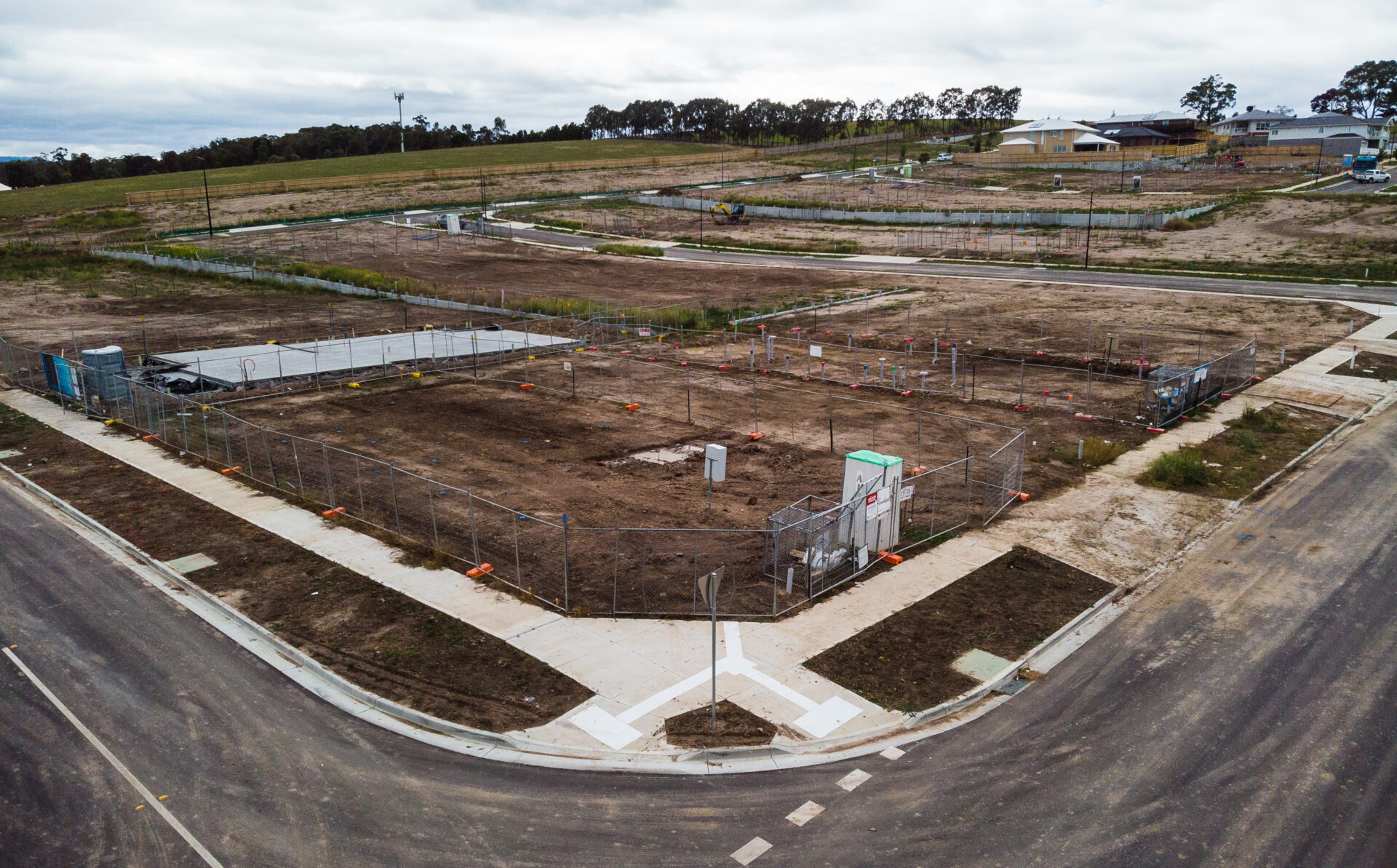
The Second Respondent, Stage B Developments Pty Ltd (Stage B), was a developer that had purchased a lot of vacant land that was part of a subdivision in Howrah. There was a covenant in the sealed plan for the land preventing Stage B from building multiple dwellings on the land. The covenant benefited the Applicant, who lived next door.
Stage B petitioned Council to amend the plan by removing the covenant. The Applicant objected to the petition.
Council appointed a Committee to hear the parties and make a recommendation to Council. Council ultimately endorsed the Committee’s recommendation to approve the petition to remove the covenant. Council also made an order, as per the Committee’s recommendation, that Stage B pay the Applicant $10,000 by way of compensation, however that compensation was only be payable if certain preconditions were met.
The Recorder of Titles, at the request of Council, then issued an amended copy of the plan with the covenant removed.
Issues before the court
The Applicant issued proceedings in the Supreme Court seeking review of the Council’s decision to remove the covenant and the award of compensation on a number of grounds which raised issues including:
- whether the Applicant had been afforded procedural fairness by Council. It was complained that certain material taken into account by Council in reaching its decision had not been provided to the Applicant;
- whether, in making its decision, Council had failed to take into account relevant matters and, on the other hand, had taken into account irrelevant matters; and
- whether Council had acted properly in making the award of compensation. It was complained that Council had simply adopted the Committee’s recommendation without giving independent consideration to the issue, and that Council was not empowered under the legislation to put conditions on the payment of compensation.
In addition to opposing each of the grounds raised by the Applicant, Stage B contended that the application was futile because, even if Council’s decision had been made in error, Stage B’s title became indefensible upon the covenant being removed and the Recorder of Titles had no power to reinstate the covenant once removed.
Decision
Ultimately, Porter JA upheld the Applicant’s application, but only with respect to the narrow issue of the compensation payable to the Applicant. His Honour ordered that the question of the amount of compensation and the conditions for payment of that compensation should be sent back to Council to be redetermined.
However, his Honour held that Council’s decision with respect to compensation was severable from its decision about removal of the covenant. In other words, his finding that there was error with respect to compensation did not mean that the decision to remove the covenant needed to be set aside.
Council’s decision with respect to the removal of the covenant was upheld, meaning that there remains no restriction on the ability of Stage B (and any subsequent owner of the land) to construct more than one dwelling on the lot.
His Honour’s findings clarified that:
- once the covenant was removed, Stage B’s title became indefeasible against the covenant. The Recorder of Title’s powers to correct the Register that were relied upon by the Applicant could not be exercised to reinstate the covenant, as that would infringe upon the principle of indefeasibility;
- to succeed in arguing a failure to provide procedural fairness as a ground for judicial review, it is necessary to show that the failure was material in the sense that the decision realistically could have been different if there had been no unfairness. His Honour held that whilst there had been some breaches of the requirement for procedural fairness by Council, the unfairness was not sufficiently material; and
- in arguing that a decision maker failed to take into account relevant considerations, it needed to be established that the consideration was one that they were bound to take into account. Conversely, in arguing that a decision maker took into account irrelevant considerations, it must be shown that the consideration was one that they were forbidden to take into account.
Key takeaways
This case illustrates the complexity of challenging administrative decisions, and the pitfalls that can arise for applicants.
The decision emphasises importance of obtaining specialist legal advice when considering seeking judicial review of an administrative decision.

Anthony Spence KC
Principal Lawyer