Seeds of a shattered duty – the effectiveness of clear disclaimers
The recent decision of the High Court in the case of Mallonland Pty Ltd v Avanta Seeds Pty Ltd [2024] HCA 25 (Mallonland) confirmed the legal test for when a duty to take reasonable care to avoid causing Pure Economic Loss will arise.
What is Pure Economic Loss?
Pure Economic Loss is monetary loss (e.g. loss of income, loss of profits or loss of other forms of financial gain) that is not the consequence of any personal injury or damage to property.
The distinction is not always intuitive. For instance, in a construction context, defects in building works will be regarded as Pure Economic Loss rather than property damage, because the loss suffered is the reduction in value of the new building/works, rather than damage to an existing building/works.
The starting point at common law is that a party does not generally owe a duty to take care to avoid causing reasonably foreseeable economic loss to others. For that reason, claims in negligence for economic loss are typically made as an option of last resort where there is no contractual relationship between the parties.
However, such a duty may be found to exist where the defendant has assumed responsibility to take reasonable care to avoid causing economic loss to another.
The High Court’s decision in Mallonland
The recent decision of Mallonland clarified the test for the existence of a duty and the key factors that will be taken into account by the courts.
The High Court found that a producer of seeds did not owe a duty to the end user of the seeds, to take reasonable care to avoid economic loss as a result of contamination.
The case highlights the ability for a party to take positive steps to disclaim (by words or conduct) the existence of a duty.
The facts
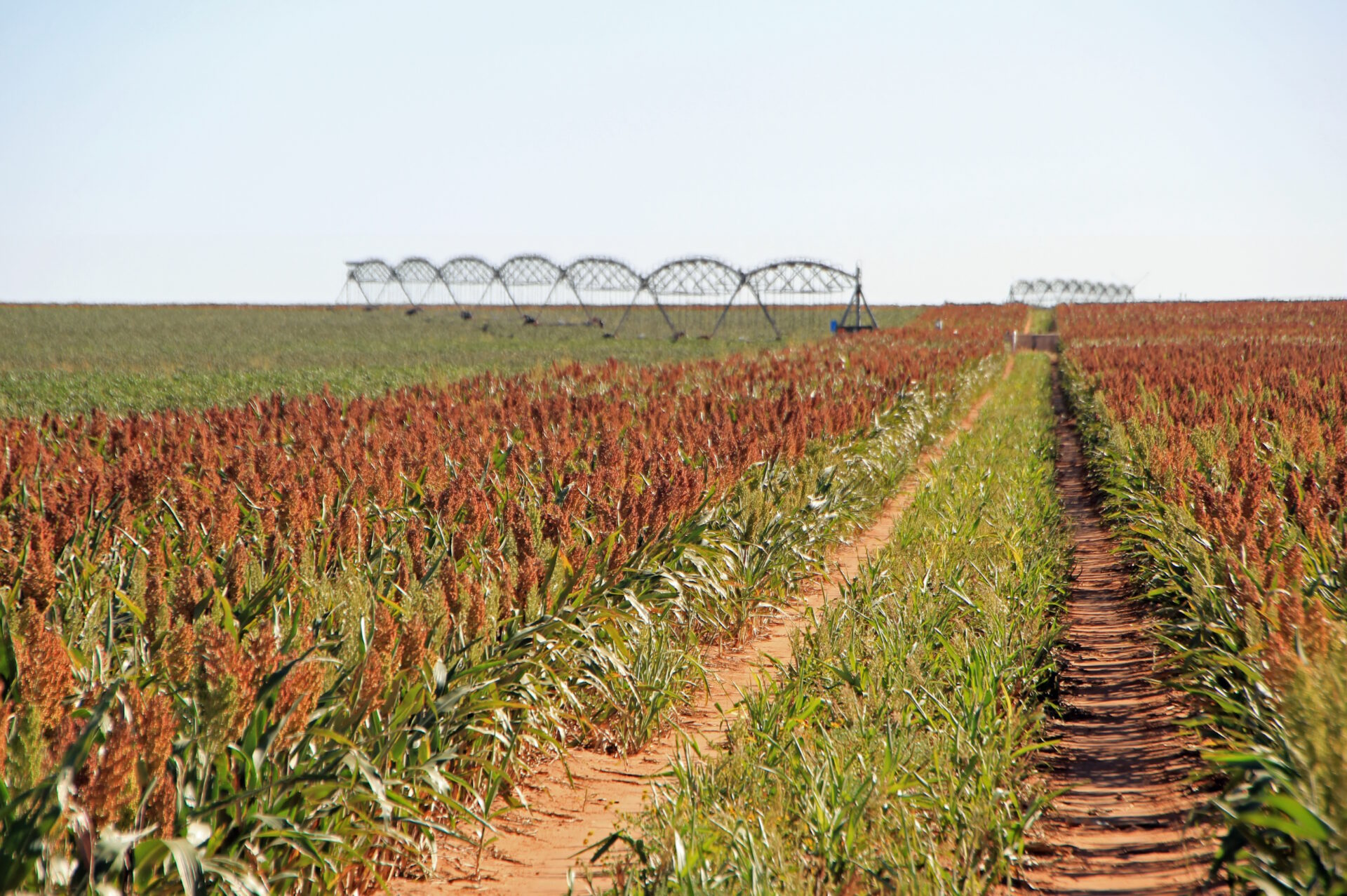
The respondent, Avanta Seeds Pty Ltd (Avanta) was one of two Australian producers of sorghum seed for distribution and sale. The appellants (the Growers) were farmers who conducted businesses involving cultivating and selling sorghum grain.
In the summer of 2010-2011, the Growers purchased bags of seed from a distributor authorised by Avanta. The distributor was not a party to the proceedings.
Some months after planting the seed, the Growers realised that it was contaminated with shattercane seeds, which is a grain that is genetically related to sorghum but is not itself useable for grain crops. The seed-head shatters meaning that the grain spreads widely and grows rapidly.
As a result, the Growers suffered economic loss including the cost of removing shattercane plants and seedlings, applying pesticides and herbicides, and the loss of profits as a result of the need to either leave the affected fields to lie for several seasons or plant less regenerative crops.
The Growers commenced a class action in the Supreme Court of Queensland seeking to recover their losses from Avanta. The Growers were unsuccessful at first instance and before the Court of Appeal. The Growers were granted special leave to appeal to the High Court, but that appeal was also unsuccessful.
The packaging
The packaging of the seeds was of critical importance to the High Court’s finding that no duty was owed by Avanta.
The bags of seed were prominently labelled, stating that the “[m]inimum purity” of the seed was “99%”. It was accepted that the seeds met that specification (the contamination with shattercane having been less than 1%).
A disclaimer was also printed on the bag, which included in large letters the words “WARNING”, “ATTENTION”, and “CONDITIONS OF SALE AND USE”.
The disclaimer provided, in plain words, that: “[Avanta] will not be liable to [the Growers] for any injury, loss or damage caused or contributed to by [the Avanta] … arising out of or related to the use of the product in this bag“.
The disclaimer further stated that if the consumer did not agree to those terms, the bag should not be opened and should be returned for a refund.
The decision
The plurality in the High Court observed that: “[a] man can be as negligent as he pleases towards the whole world if he owes no duty to them.”
In this case, notwithstanding that:
- Avanta had knowledge of the facts giving rise to the risk of economic loss to the Growers if it did not take steps to avoid contamination;
- the contamination arose because Avanta had failed to exercise a reasonable standard of care in removing unwanted plants from the production field and in the growing samples of seed; and
- the Growers could not have detected the defect prior to planting the seeds and could only protect themselves from loss by either choosing not to buy, or not to plant, the seeds,
the High Court held that no duty was owed by Avanta.
The High Court found that the disclaimer printed by the respondent precluded a responsibility to, and by extension, a relationship between the respondent and the appellant that would lead to the existence of a duty of care.
Importantly, the disclaimer did not create any contract between Avanta and the Growers, but rather demonstrated that Avanta had not assumed responsibility for loss that may be caused to the Growers.
Key takeaways
Some key principles emerging from the High Court’s decision are
- the starting point is that a defendant does not generally owe a duty to take reasonable care to avoid causing others Pure Economic Loss;
- however, a duty may arise where the defendant has assumed responsibility towards the plaintiff to take reasonable care to avoid causing Pure Economic Loss. The entirety of the circumstances and relationship need to be considered; and
- the defendant can negate or limit the duty by words or conduct (in this case, the disclaimer).
The case emphasises the potential effectiveness of including clear disclaimers to exclude or limit liability to end users of advice or services.
A disclaimer may not be a sure way to avoid liability for negligence in all cases, but it can in some cases be a strong factor against a duty of care existing if the question arises.